

TechOnion Startup Lab
Why Growth Matters for Every Startup
Oct
Survival is the most overrated achievement in startups.
In February 1943, Dublin was a city doing its best to look away from the world. Ireland had declared itself neutral and called the world war “the Emergency,” as though it were a power cut that someone would soon fix. Tea was rationed. Coal was scarce, so households burned turf cut from the bogs. Even so, on certain evenings that month, people with ration books and damp shoes filed into a lecture theater at Trinity College to hear a refugee ask a question so plain it embarrassed the room. He was Erwin Schrödinger, fifty-five, a Nobel laureate who had fled Austria after the Nazi annexation and now worked at the Dublin Institute for Advanced Studies. His title had three words.
What Is Life?
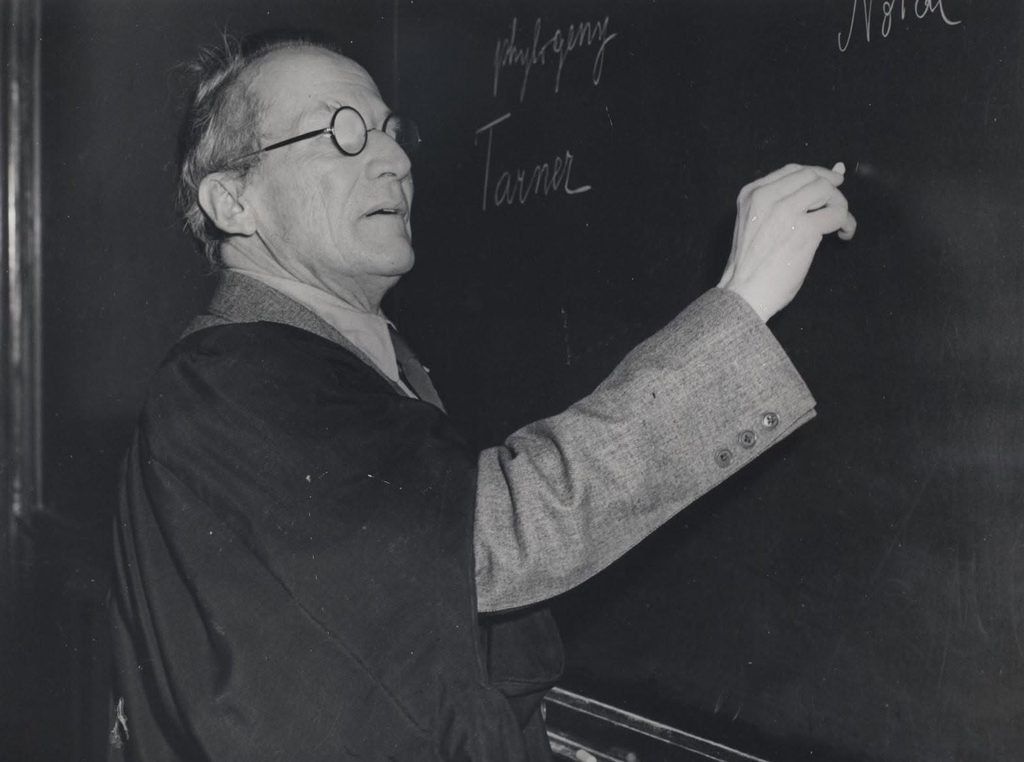
Physics in 1943 was brilliant about stones, stars, and gases, and almost helpless before a mouse. A cell obeys the same laws as a rock. Yet the laws say order dissolves, that everything drifts toward a grey, even disorder, and a rock complies by sitting still and eroding. A cell does the reverse. It builds proteins, repairs damage, and divides. Schrödinger’s answer, delivered in those lectures and published as a book the following year, was that a living thing holds its order by feeding. It draws order in from outside and pushes disorder out, and he called what it consumes “negative entropy.”
A stone is finished. A cell is in the middle of a transaction.
Stop the transaction and the cell does not rest. It decays. Death, in his picture, is less a dramatic event than a ruling on the accounts: the moment intake can no longer pay for staying organized. Life is not what a body is. It is what a body keeps taking.
Forty-two years before that evening, in southeast Texas, a man stood in mud and watched a column of drilling pipe leave the ground.
Go back to 1900 to see how strange that was.
There are about eight thousand cars in the entire United States, each one a rich man’s toy. Oil exists mostly to be refined into kerosene for lamps and grease for axles, and Texas is not an oil state that we know today. Beaumont is a rice-and-lumber town of fewer than ten thousand people. Just south of it, a low swell of prairie called Spindletop rises barely above the surrounding flats. Gas bubbles up from its sulfur springs, and the smell reaches the road.
A self-taught Beaumont man named Pattillo Higgins looked at those bubbles and decided something huge sat underneath. In 1892 he helped form the Gladys City Oil, Gas, and Manufacturing Company, named for one of his Sunday school pupils. The prevailing wisdom said flat Gulf Coast prairie held nothing worth drilling. Between 1893 and 1895 the oil venture sank three shallow wells with cable tools. All three failed, and by 1895 Higgins was out of the company. The hill had given him plenty of resistance and no vindication.
He did not stop, and he did something shrewder than drilling again. He advertised for a partner with money and knowledge, and one answered: Anthony Lucas, born Antun Lučić in Split, then part of Austria-Hungary. Lucas was perhaps the best-informed man in America on salt domes, the buried underground columns of salt that can trap oil beneath them. He leased the hill in 1899 and drilled to 575 feet before the money and the geology defeated him. He had the right idea about the formation. Loose, water-soaked sand kept collapsing into his hole.
Then Pittsburgh money arrived, through John Galey and James Guffey with Mellon family financing, and with it the Hamill brothers, drillers from Corsicana, Texas. The Hamills brought a rotary rig that circulated heavy mud down the hole to hold the sand back. Knowledge, money, and the right machine finally arrived together on the same hill.
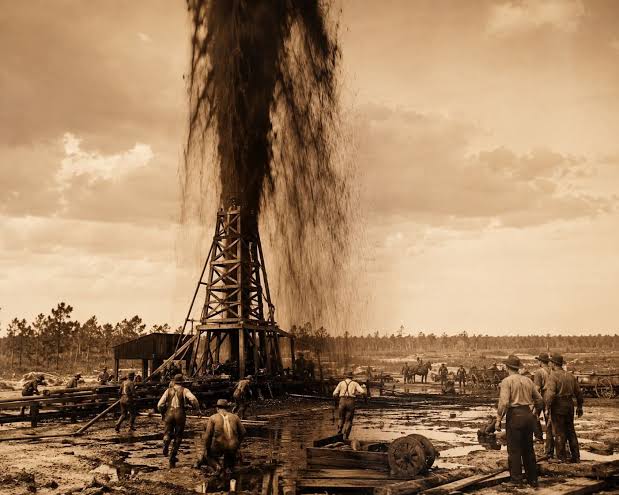
On January 10, 1901, at a depth of 1,139 feet, mud began to bubble from the well. Drilling pipe shot out, then everything went quiet. Then oil rose more than a hundred feet into the Texas sky.
It took nine days to cap. Estimates of the flow run from 70,000 to 100,000 barrels a day, more than any well in America had produced.
The hill itself had not changed. It was the same swell of prairie Higgins had stared at a decade earlier.
Why did the oil come out like that?
Nobody summoned it. It was trapped beneath the salt dome, squeezed by gas, pushing against rock for ages before anyone arrived with a pipe.
Oil does not need to be persuaded. It just needs a way out.
Now take that scene, and the cell in Dublin, and bring them back to the first sentence.
A startup in its sixth month is Schrödinger’s cell in a lecture hall. It is spending order, meaning cash, sleep, goodwill, and a founder’s remaining patience, and the only question that matters is what is crossing the membrane in the other direction. Customers cross it. So do revenue, referrals, and the quiet fact that somebody paid for something and came back. Everything else is internal weather.
Survival is what you call it when the outflow hasn’t won yet. It measures how much time has passed, not how healthy the thing is.
Startups play a game of two halves, and almost all the startup advice is written about only one of them.
The first half is survival. The clock is the runway, the opponent is the calendar, and the task is to find a repeatable exchange with people who will pay. Many startups die here. They don’t die dramatically. They run out of money a few months before they run out of ideas.
Paul Graham gave this half its cleanest test in 2015 when he asked whether a startup was default alive or default dead. If the startup keeps its current expenses and its current growth rate, does it reach profitability before the cash runs out? Look at what that definition contains. The most conservative survival test a founder can run is a growth question wearing a lab coat. You cannot compute whether you are default alive without the slope of your revenue.
That is why growth matters in the first half. It supplies evidence and resources in the same motion. A second customer makes the first less likely to be a fluke. A renewal says the attraction survived contact with ordinary use. A referral says someone thought the product was worth attaching their name to. And the money shows up either way you pay for the journey. A seed investor is not buying your product. They are buying a slope. A bootstrapped founder has a different investor, the customer, who pays in installments called growth.
The second half starts quietly, with no whistle. The startup has customers, perhaps thousands of them or millions. Its name circulates, and its founder is invited onto podcasts. The first half felt like a fight, and the team assumes more of the same fight will finish the job.
But the scoreboard that told them they were alive is not the one that decides this half. This half is about success, which means profit. After serving all those customers, what does the business get to keep?
Think of the first half as earning the right to keep playing, and the second as making the game worth winning. A startup that wins the first half and ignores the second has bought a very expensive ticket to a very long evening.
GoPro shows how long that evening can run.
Go back to the summer of 2014. Smartphones are everywhere, but no one’s phone records a clean ski run in a blizzard. GoPro has just listed on Nasdaq, its founder Nick Woodman now a public-market figure who began by strapping a camera to his wrist to film surfing. The company reports that video views of GoPro content on YouTube are up 200 percent year over year, and its flywheel is as pure as marketing gets: customers shoot the footage, the footage sells the cameras. For the full year, GoPro will report revenue of $1.394 billion, up from $985.7 million the year before. Operating income will come to $187 million, a 13.4 percent margin. That is a startup that survived its first half and walked into the second half with money in its pockets.
And that is exactly the point. Look at what the second half did to it. GoPro’s 2025 revenue was $652 million, down 19 percent. It posted a loss of about $93 million. In the second quarter of 2026, revenue was roughly $105 million, down 31 percent from the same quarter a year earlier, with a net loss of $51 million. In September, GoPro announced new financing to strengthen its liquidity. Revenue is now less than half the 2014 level.
GoPro did not fail the first half, and it did not even fail the early part of the second. It figured out how to make money. What it could not do was keep the exchange growing while the world moved around it.
The competitors were other cameras: Insta360 and DJI built action cameras of their own, sometimes with better stabilization and cleverer software. Those are the fair fights. The incumbents are the phones. Something that people already carry gets better every year, takes the same kinds of video, and costs nothing extra. Competitors take your customers. Incumbents take the reason for your existence.
This is why the common belief that growth and profitability are opposing goals gets the order wrong. Profit is a place. Growth is how you get there, and how you stay there. Without growth in customers, in retention, in revenue per customer, or in margin, a profitable startup is a stone sitting in the sun, and the sun keeps moving.
Notice, too, that growth can be the wrong kind. Consider a hypothetical AI product charging twenty dollars a month. Its average customer burns about fourteen dollars in model costs. Its heaviest users, the enthusiastic ones, the power users, the ones who tweet screenshots, burn twenty-six. Each of those delighted people deepens the monthly shortfall. A hockey stick can point at a cliff.
That is the variable-cost treadmill most AI startups are standing on, whether they have looked down or not. When a product runs on metered model calls such as Claude Code through the API, cost scales with usage, and providers keep adjusting prices and plans as compute costs and demand shift. The founder is no longer an owner. They are a tenant of a factory they cannot inspect, paying by the token. When the meter runs and the price moves, “unlimited usage” starts to sound like an existential threat.
So growth is the only thing that matters, but only if you ask what kind. A startup needs growth in the exchange itself, meaning customers who stay, who pay more than it costs to serve them, and who bring others. Anything else is noise in a British pub on a saturday afternoon.
Now return to the hill, because the founder’s version of the Spindletop story usually gets told wrong.
The startup world tells it as a parable of persistence. Higgins never quit! But look at what Higgins actually did before he found oil. He drilled three shallow holes with the same method on the same ground and got the same answer three times. That is not persistence. That is repetition, and repetition guards the original theory against the evidence.
Compress the history into three seekers. The first has conviction and no instruments. The second has money and machinery and drills where he is told to, and he drills for years and finds nothing. The third, Lucas, studies the geology and learns what a salt dome looks like from the surface, then waits until the right rig and the right money arrive. Three people stood on the same hill and only one of them knew where to put the pipe.
Growth hacks are rigs. Geology is knowing where the pressure is.
What makes the old story urgent is what has happened to the cost of drilling. In 2015, a founder needed a cofounder, a GitHub repo, and about six months to produce a working prototype – an MVP. In 2026 they open a MacBook Air, type a prompt into Cursor, and has something running before their coffee cools. Lovable, Replit, and Claude Code can sink a dozen wells by lunch. The product half of product-market fit has been substantially automated.
The market half has not moved an inch. Markets are made of people, and people remain moody, stubborn, and distracted, closer to British weather than to a spec sheet. You can generate the dashboard in an afternoon. You cannot generate the agency owner who trusts it with their client’s balance.
When drilling gets cheap, geology becomes very expensive.
It changes the competitive math as well. The rival startup next door gets the same tools on the same day and may launch the same product the same week. The incumbent, who already has the customers, the contracts, and the distribution, gets them too, and was already ahead before it got faster. Model access, meanwhile, is fungible: one lab’s capability, rented at the same price, is identical in whoever’s hands it sits. What compounds is what no model has. That means the specific conversations you had with specific customers, the dataset you earned by permission, the relationship you built over two years of showing up, and the taste you built from watching the same mistake fail a hundred times. A prompt can write the pitch. It cannot supply the history.
All of this brings us to the question the oil story was always asking.
What is the pressure?
Pressure is the thing pushing under the surface of a market, the need that has not yet found a satisfactory way out. Sometimes it is a cost that should be small and isn’t. Sometimes it is the humiliation of a system that keeps failing in front of a client. Sometimes it is ambition: someone wants to make music, start a business, or build something worthy of the person making it. Pressure includes pleasure and aspiration as well as pain. People buy better versions of their own lives, including versions they had never thought to ask for.
Higgins read the surface: gas bubbling from springs, a smell on the road. The founder’s version of those bubbles is the workaround. Look for the spreadsheet that someone rebuilds every month, the intern assigned to copy numbers between two systems, the Slack channel where people keep complaining about the same thing. A workaround is a person already paying for a solution with time, money, or embarrassment. That is gas coming up through the ground.
An imagined founder, building software for small agencies, has a handsome prototype and twelve people who call it “interesting.” They add reporting, then an AI assistant, then another integration. Six months later the product has much more software in it and roughly the same amount of demand. Then they sit and watch one agency owner close her month. The owner exports transactions, fixes names, matches invoices, and phones a colleague because a payment arrived without a usable reference. What the founder notices is not the time lost. It is the fear in the owner’s voice at the thought of telling a client the wrong balance. Accuracy carries reputational weight. A tool that saves twenty minutes but adds uncertainty might make her life worse.
That observation changes the product, the demo, the promise, the pricing conversation, and which agency owners deserve a call. It also changes the founder’s feeling about the work. A customer interview becomes useful only when it alters a decision. Until then it is a conversation with refreshments.
Pressure needs plumbing, though. Paul Graham’s account of Stripe’s early days has Patrick and John Collison, when a user agreed to try the product, saying “give me your laptop” and installing it on the spot. They did not leave a link and good intentions. Strong demand makes distribution more productive. It does not excuse the founder from building the pipe between interest and use. Interest sits behind switching costs, budget politics, training, and the fear of being blamed. The apparent inertia is usually sensible.
How do you tell whether a failed attempt means the ground is empty or the drilling was wrong? This is the discipline that separates persistence from repetition. After each failure, ask what it tested. Was the offer seen? Understood? Tried? Did it solve the problem? Did anyone value the result enough to pay? Each answer locates the next uncertainty. Higgins’s three dry holes did not prove the hill empty. They proved that shallow cable tools could not reach what was there.
Write the prediction down before the experiment. Memory is a generous editor of entrepreneurial intentions. It can turn a failed sales test into a successful awareness campaign by the next team meeting. A forecast on paper preserves the question you actually asked.
The tempting alternative, always, is another tool. Tools offer immediate, controllable progress. A founder can configure an analytics dashboard tonight, while the uncomfortable conversation with the customer who hesitated sits for another week. The dashboard supplies buttons, charts, and the satisfaction of completion. The conversation may supply a fact that ruins the roadmap. Shiny object syndrome is often a preference for questions with obedient answers.
A better order of questions beats a better tool. What is the constraint? What evidence identifies it? What small intervention could change it? What result would show that the explanation was wrong? A tool earns its place by helping answer one of them.
The same standard applies to anything a founder spends time learning. A framework is worth having only if tomorrow’s customer call goes differently because of it.
One caution applies to the oil metaphor. Markets are not reservoirs. Demand can be created, shaped, and discovered in motion, and a reservoir does not watch your product demo. The metaphor is a lens, not a law. It earns its place by redirecting attention from the machinery to the pressure beneath it.
There is a second thing the story teaches about growth, and it concerns what happens after you find something. When the Lucas gusher came in, the work had barely begun. The oil had to be contained, stored, and carried to refineries and buyers. Tanks, pipelines, and processing plants had to be built before the fountain was worth anything. Spindletop helped trigger an industry precisely because the infrastructure followed the strike.
The startup world photographs the fountain. It loves the product launch, the queue, the adoption curve, the founder suddenly hard to book for podcast and YouTube interviews. Then it copies the visible machinery: the pricing page, the launch thread, the choice of programming language. A thousand founders reproduce the rig. Far fewer ask what was pushing underneath.
And when demand does arrive, it brings demands of its own. The first customer got your personal attention. The hundredth exposes the hidden labor inside that attention. A new channel brings buyers with weaker intent. A larger client brings obligations that eat the apparent profit. Growth supplies information as well as revenue, and some of that information is inconvenient. Success loads weight onto assumptions that were already close to breaking.
This is what the second half is made of. The founder has to discover which parts of the original service can expand without losing the reason customers valued it. Fixing that early is cheaper than fixing it at scale. The prize of getting it right is not a nicer dashboard. It is a startup that earns the means to continue, and with that the freedom to choose. It can say no to a bad customer. It can question a rushed financing term. It can train an employee properly and improve the product before an emergency forces the work. Profit supplies room to act, provided it arrives as cash when the business needs it.
There is also a human accounting. Startup years are ordinary years of a person’s life. Children grow during them. Parents age. Friendships wait for the promised quieter month. The opportunity cost is larger than the salary left behind, and the attention spent cannot be returned. None of that makes ambition foolish. It makes observation a form of respect for ambition. Someone willing to give a decade to a problem deserves a clearer reason than the fear of admitting that last year was inconclusive.
That founder has more than two options, blind persistence or humiliating surrender. There may be another segment, another offer, another way to deliver the benefit. There may also be a sound decision to stop. Growth thinking earns its name when it helps resources, including the founder’s own finite energy, reach productive use. Keeping a particular legal entity alive cannot be the highest purpose of a life.
Which returns us to Dublin, and to what Schrödinger was actually saying.
He was not saying that life is what lasts. If lasting were the measure, the stone would win. A stone survives for billions of years with no funding round, no pivot, no investor update, and no rent. By the cheapest definition of survival, the stone is the greatest survivor in the universe, and nobody has ever mistaken it for alive. What distinguishes the living thing is the transaction. It is in the middle of taking something in and putting something back, and it must keep doing so, or it joins the stones.
That is the sentence that opened this essay, and now it can be read the way it was always meant. Survival is the most overrated achievement in startups because every dead thing is good at it. The stone sits in its field. The startup that has stopped learning but not yet run out of money sits in its office, with a roadmap, a Slack workspace, and a growing list of tools. Both are surviving. Only one of them is in the middle of anything.
And at Spindletop, the men standing in the mud on January 10 understood something that no deck could have told them. The oil had been there, pushing, for as long as the hill had existed. Higgins did not create the pressure. Lucas did not create it. They found it, and then they spent years building everything needed to make it useful.
Picture a founder tomorrow morning, opening the MacBook Air. The roadmap is there. So are the unread announcements, the new tools, and the reassuring traffic chart. Beside them is a message from a customer, describing a problem in language the founder would never have invented. The cursor drifts toward it. Somewhere in those ordinary words is a place to begin drilling.
Find the pressure.
Find the pressure. Choose the next move. Startup Growth System is a 90-minute course for founders who have shipped without customers, have users without clear product-market fit, or have found demand and now need to scale. Six frameworks connect customer understanding, strategy, distribution, and growth decisions. Explore the course and watch the introduction — $149.